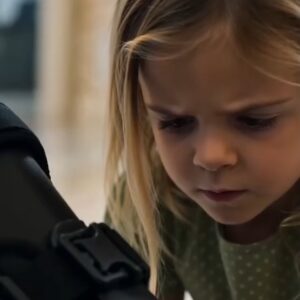
PART 2: “Excuse me,” she said politely. “May I show you something, Your Honor.”
The room seemed to hold its breath.
I was on my feet instantly, panic rising, but the judge raised a hand in a gentle motion that stilled everyone.
“What do you have to show me,” the judge asked, her tone kind but attentive.
Phoebe hugged her backpack closer. “It is a video. I recorded it myself. My mom does not know about it.”
My pulse roared in my ears, because there are few things more terrifying than realizing your child has been carrying something alone, something important enough to bring into a courtroom without your guidance.
The attorneys exchanged looks. Permission was requested. I turned toward my lawyer, my thoughts racing, and after a brief moment I nodded, trusting instinct over fear. Joel nodded too, though his lips pressed into a thin line and his eyes flickered toward Phoebe with something that looked like alarm.
The court clerk connected the tablet Phoebe handed over to the display screen, and when the image appeared my stomach tightened sharply.
It was our living room, dimly lit in the evening, familiar down to the crooked picture frame and the worn arm of the couch. A timestamp glowed in the corner from several months earlier. Phoebe sat on the sofa clutching her fox, her posture rigid, her eyes fixed forward in a way I recognized with sudden horror, because I had seen that same stillness on her before and dismissed it as tiredness.
Then Joel entered the frame.
He was not yelling. He was pacing, phone in hand, voice low but edged with tension, and he spoke with a sharp focus that made the hair on my arms stand up.
“I told you I would take care of it,” he said into the phone. “You need to stop pushing me.”
A murmur rippled through the room.
“Listen,” he continued, frustration leaking through control. “She has no idea what is coming. As long as I keep things calm until everything is filed, this stays manageable.”
My lawyer’s pen stopped moving.
Joel sank onto the couch beside Phoebe, so close that my chest tightened, and he did not seem to notice her presence at all.
“I cannot keep pretending forever,” he said. “If she finds out too early, she will fight me on everything. Custody included.”
The sound left my lungs in a silent rush.
Phoebe’s small voice came through the speakers then, hesitant and gentle.
“Dad,” she asked. “Why are you talking like that. Mom did not do anything bad.”
Joel’s head snapped toward her, irritation flashing across his face.
“This is adult stuff,” he said sharply. “You do not repeat this to your mother. Do you understand. Not a word.”
Phoebe shrank back, clutching her fox tighter.
The video ended. No one spoke.
The morning the divorce papers appeared in my life did not arrive with thunder or raised voices, but with a stillness so complete that it unsettled me more than any shouting ever could, because silence has a way of magnifying dread when you know something has already gone wrong. I had been standing at the kitchen sink rinsing a chipped blue bowl while sunlight crept across the counter, and my daughter Phoebe sat at the table humming to herself as she pushed cereal around with her spoon, when I noticed a thick envelope resting beside her elbow like it had always belonged there.
I knew what it was before I touched it, because after nine years of marriage you learn the weight of certain moments even before they announce themselves, and when I opened it and read the words printed in flat legal language, my name spelled correctly and my life reduced to paragraphs and clauses, I felt an odd clarity rather than shock, as if my body had been bracing for this long before my mind caught up.
Joel had already left for work. He did not leave a note. He did not call. He let the documents speak for him, and they spoke coldly and efficiently, outlining separation, custody proposals, and a future that did not include the quiet routines we had built together.
I did not cry then. I folded the papers, set them aside, and poured more milk into Phoebe’s bowl, because she was watching me too closely, and I had learned to keep my face steady when her eyes searched for reassurance.
The weeks that followed passed in a blur of consultations, late nights reading unfamiliar terminology, and moments when anger surged only to collapse into exhaustion, because grief has a way of cycling through emotions without warning. Joel and I spoke little, and when we did our conversations stayed carefully neutral, as though both of us feared what might surface if we allowed honesty to stretch its legs.
The day of the first custody hearing arrived wrapped in fluorescent light and antiseptic air, the kind that clings to old government buildings and reminds you that countless lives have been quietly unraveled in the same rooms long before yours ever entered. Phoebe sat beside me on the wooden bench, her legs too short to reach the floor, her small backpack clutched in her lap, and tucked inside it was her favorite stuffed fox with one ear permanently bent from years of love.
I watched Joel from across the room, his shoulders tight, his gaze fixed on the polished surface of the table in front of him, and for a moment I wondered if he was feeling the same hollow pressure in his chest that I was, or if he had already sealed himself off from the weight of it all.
The judge entered, an older woman with composed eyes and a voice that carried authority without sharpness, and the proceedings began in the measured rhythm of law, where emotions are acknowledged only when they intersect with evidence. Custody schedules were discussed, temporary arrangements proposed, and I focused on breathing evenly while keeping one hand wrapped around Phoebe’s.
Then something shifted.
Phoebe tugged gently at my sleeve and whispered my name, her voice hesitant, and before I could respond she slid off the bench and walked forward with a calm that did not belong to a child of seven. The sound of her sneakers against the floor echoed too loudly in the quiet room, and I felt my heart stumble as every adult turned to look at her.
She stopped just short of the bench, craned her neck upward, and spoke in a clear voice that carried farther than I expected.
“Excuse me,” she said politely. “May I show you something, Your Honor.”
The room seemed to hold its breath.
I was on my feet instantly, panic rising, but the judge raised a hand in a gentle motion that stilled everyone.
“What do you have to show me,” the judge asked, her tone kind but attentive.
Phoebe hugged her backpack closer. “It is a video. I recorded it myself. My mom does not know about it.”
My pulse roared in my ears, because there are few things more terrifying than realizing your child has been carrying something alone, something important enough to bring into a courtroom without your guidance.
The attorneys exchanged looks. Permission was requested. I turned toward my lawyer, my thoughts racing, and after a brief moment I nodded, trusting instinct over fear. Joel nodded too, though his lips pressed into a thin line and his eyes flickered toward Phoebe with something that looked like alarm.
The court clerk connected the tablet Phoebe handed over to the display screen, and when the image appeared my stomach tightened sharply.
It was our living room, dimly lit in the evening, familiar down to the crooked picture frame and the worn arm of the couch. A timestamp glowed in the corner from several months earlier. Phoebe sat on the sofa clutching her fox, her posture rigid, her eyes fixed forward in a way I recognized with sudden horror, because I had seen that same stillness on her before and dismissed it as tiredness.
Then Joel entered the frame.
He was not yelling. He was pacing, phone in hand, voice low but edged with tension, and he spoke with a sharp focus that made the hair on my arms stand up.
“I told you I would take care of it,” he said into the phone. “You need to stop pushing me.”
A murmur rippled through the room.
“Listen,” he continued, frustration leaking through control. “She has no idea what is coming. As long as I keep things calm until everything is filed, this stays manageable.”
My lawyer’s pen stopped moving.
Joel sank onto the couch beside Phoebe, so close that my chest tightened, and he did not seem to notice her presence at all.
“I cannot keep pretending forever,” he said. “If she finds out too early, she will fight me on everything. Custody included.”
The sound left my lungs in a silent rush.
Phoebe’s small voice came through the speakers then, hesitant and gentle.
“Dad,” she asked. “Why are you talking like that. Mom did not do anything bad.”
Joel’s head snapped toward her, irritation flashing across his face.
“This is adult stuff,” he said sharply. “You do not repeat this to your mother. Do you understand. Not a word.”
Phoebe shrank back, clutching her fox tighter.
The video ended. No one spoke.
The judge removed her glasses slowly and set them aside, her expression unreadable as she sat with her hands folded, absorbing what she had just seen. When she finally looked up, her gaze fixed on Joel with a steadiness that felt heavy.
“Would you like to explain this,” she asked.
Joel stood, his chair scraping against the floor, and began to speak, but his words tangled over themselves, stress and pressure offered as explanations, misunderstandings cited without clarity, and each sentence seemed to collapse before it reached completion.
The judge raised her hand.
“I am not interested in justifications,” she said calmly. “I am concerned about the emotional environment this child has been exposed to.”
She turned her attention to Phoebe, who stood quietly near the bench, her small frame squared with determination.
“Thank you for bringing this forward,” the judge said. “That required courage.”
Phoebe nodded once.
I reached for her and she came to me immediately, her hand slipping into mine with relief.
The judge straightened, her voice firm now, resonating with finality.
“Based on the evidence presented, this court is ordering an immediate temporary adjustment to custody,” she announced. “Primary physical custody will be granted to the mother, effective today, pending a full evaluation.”
I felt my knees weaken, not from triumph, but from the weight of how close we had come to something far worse.
The judge continued, outlining the next steps, including assessments and further hearings, and when Joel attempted to interrupt, she silenced him with a single look.
“The priority of this court is the well being of the child,” she said. “That is not subject to negotiation.”
When the hearing ended, people gathered their files quietly, conversations subdued, and Joel approached us near the exit, his face pale, his composure fractured.
“I never meant to hurt her,” he said, his voice breaking. “I did not think she understood.”
I met his eyes, exhaustion and resolve settling in my chest.
“This is not the moment,” I replied softly.
He nodded, stepping back, and watched us leave without another word.
Outside the courthouse, the air felt warmer, the sky brighter, as though the world had resumed its motion now that the truth was no longer trapped inside that room. I knelt in front of Phoebe, brushing her hair back gently.
“You were very brave,” I said. “Why did you keep this to yourself.”
She looked down, her voice small. “He said you would be upset. I did not want you to be sad or fight more.”
Tears finally burned my eyes as I pulled her into my arms.
“You did nothing wrong,” I told her firmly. “You protected yourself. I am so proud of you.”
We walked away hand in hand, uncertain of what the future would bring but grounded in the knowledge that silence had been broken, and sometimes the strongest truth enters a room on the smallest voice, refusing to be ignored any longer.