In today’s digital age, finding our way through forests has become a breeze. With the help of maps and GPS, we can navigate with ease. But have you ever wondered how people in the past managed to find their way without these modern conveniences? It turns out, Native American tribes had their own unique method – bending trees.
Discovering Ancient Trails
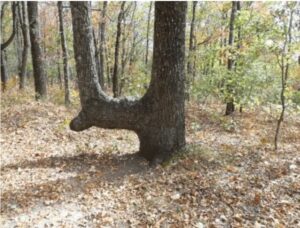
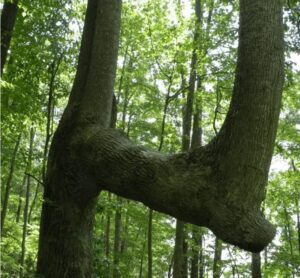
The Native Americans achieved this remarkable feat by inserting a piece of a tree into a hole and allowing it to grow around it. The result? Trees with distinctive bends that have stood the test of time. While some trees in the wild may have irregular shapes due to nature’s whims, the bent trees have peculiar features that give away their man-made origin. You might notice a noticeable nose or a distinct notch at the end of the bend.
These bent trees also served as trail markers left by indigenous people. By examining the scars on the trees from the straps that were used to secure them when they were young, we can further identify the paths that Native Americans marked.
Living Historical Monuments
These remarkable trail markers have a history spanning over 150 to 200 years. They guided Native Americans through rough terrains, leading them to water sources, food, and other important landmarks. Today, many of these trees have grown into old, gnarled giants, silently bearing witness to the rich history they helped shape. Just imagine the stories they could tell.
Preserving our Living History
To protect and preserve these remarkable trees, the Mountain Stewards website was created. The website meticulously maps out over 1,000 bent trees across the country, documenting their locations. This valuable resource allows us to appreciate and learn from these living pieces of history.
Delve Deeper into History
If you’re captivated by this historical fact and want to explore the vast array of bent trees scattered across America, watch the video below. And don’t forget to share this fascinating article with your family and friends on Facebook. Let’s spread knowledge and appreciation for our rich heritage.